Buying Waterfront Property in Big Lake: Key Alaska Considerations
June 4, 2026
June 4, 2026
Dreaming about waking up to lake views in Big Lake? Waterfront property can deliver a lifestyle that feels uniquely Alaskan, but it also comes with extra layers of due diligence. If you are thinking about buying on the water, you need more than a standard home search. You need a clear plan for access, permits, utilities, and year-round use. Let’s dive in.
Big Lake is a scenic Mat-Su community about 13 miles from Wasilla, with year-round recreation that includes boating, fishing, skiing, and mushing. That mix of access to outdoor living and proximity to Wasilla is a big reason buyers look here for primary homes, second homes, and lifestyle properties.
When you buy waterfront in Big Lake, though, the shoreline is only part of the story. The real value of a property also depends on how it functions in winter, how you access it, and what you can legally do with the lot and waterfront improvements.
A beautiful lot does not help much if access becomes difficult in winter. In Big Lake, road maintenance can vary because roads may be maintained by the borough, the state, a city, or not maintained at all.
The Mat-Su Borough also identifies local Road Service Areas, or RSAs, for Big Lake and nearby areas. These RSAs allow the borough to levy taxes for road construction, reconstruction, maintenance, and drainage. For you as a buyer, that means it is worth confirming not just whether a road exists, but who maintains it and whether winter upkeep is reliably funded.
If you are buying remotely or on a tight timeline, this step matters even more. Alaska property decisions often turn on practical details, and road access is one of the first items to verify before you get attached to a waterfront listing.
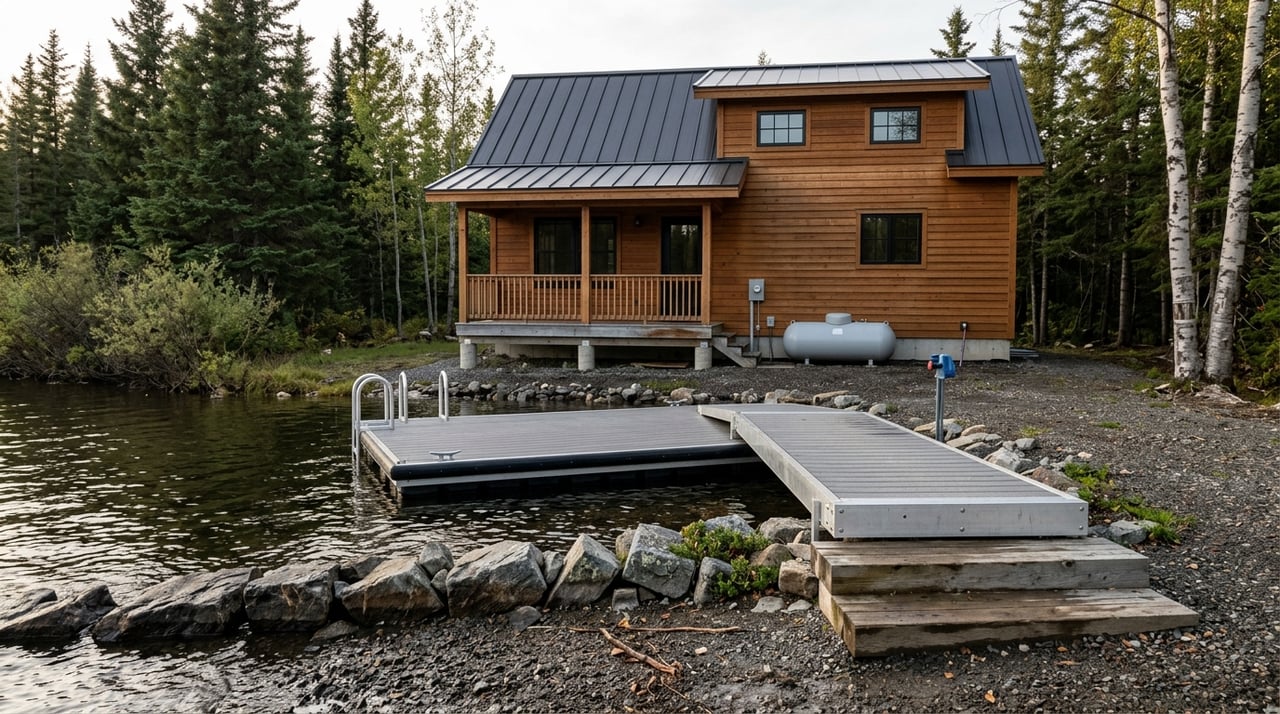
One of the biggest surprises for waterfront buyers is that dock planning in Big Lake is not generic. The Mat-Su dock-permit matrix treats the cove near Big Lake North SRS differently from Big Lake everywhere else.
In the cove area, Alaska State Parks, ADF&G Habitat, and the U.S. Army Corps of Engineers are involved. In the rest of Big Lake, ADF&G Habitat and the Corps are involved. That means your exact location on the lake affects the approval path.
The state also notes that the Corps requires a permit for any structure on Big Lake or Flat Horn Lake. If your plans involve fill below the ordinary high water mark or on wetlands, that can trigger additional Corps review.
If you picture adding or updating a dock after closing, slow down and verify the rules first. Alaska State Parks' permit guidance for Big Lake says a personal-use dock is limited to one dock per lot, up to 450 square feet, and up to 50 feet offshore.
Pile-supported docks and floating docks are allowed. Covered docks, platforms, boat houses, and shoreline cuts or fills below the ordinary high water mark are not allowed under that permit framework.
Big Lake is also identified as an anadromous water body. Because of that, an ADF&G Fish Habitat Permit is required before the general dock permit is issued.
There is also a practical construction detail many buyers miss. Winter work may occur from shore, a floating barge, or the frozen surface, but heavy equipment use from ice is not automatically authorized.
For a waterfront purchase, dock permits should be part of your pre-closing review. The State Parks permit guidance notes that the dock permit is transferable to future upland property owners with written notice.
That sounds simple, but it means you want to confirm what paperwork exists, whether the dock matches the permit history, and what needs to transfer with the property. A missing or unclear permit file can turn a nice amenity into a post-closing headache.
This is one reason waterfront buying benefits from a process-driven approach. You are not just buying a house and lot. You are buying a shoreline setup, a use pattern, and a permit history.
Many Big Lake waterfront properties rely on private systems rather than city utilities. If a property uses a private well, the Alaska Department of Environmental Conservation says the owner is responsible for sampling and testing. The state does not sample, test, or regulate private-well water quality for you.
DEC recommends annual nitrate and coliform testing and advises owners to keep well records and protect the wellhead from snow, vehicles, and other contamination sources. It also notes that minimum separation distances apply under state regulations.
For you as a buyer, this means the well should not be treated like a background detail. Ask what records exist, when the well was last tested, and whether the location and protection of the wellhead make sense for winter conditions and ongoing maintenance.
Onsite wastewater systems in Alaska are subject to state regulations, and DEC's real estate guidance encourages buyers and sellers to start early. That includes verifying system documentation, confirming the bedroom count, confirming the legal description, and allowing 30 days or more for engineering plan review when needed.
In simple terms, you want to make sure the septic records match the actual house, lot, and intended use. If the home has been changed over time, or if records are incomplete, that can affect your timeline and next steps.
This is especially important for waterfront lots where site constraints can make changes more complicated. A home may look move-in ready, but the supporting systems still need to line up on paper and in practice.
If you are planning to build, expand, add improvements, or make site changes, borough permits can matter just as much as state dock rules. In areas outside Palmer, Wasilla, and Houston, the Mat-Su Borough requires a Mandatory Land Use Permit for certain development within 75 feet of a watercourse or waterbody.
The required site plan must show parcel boundaries, setbacks, driveways, nearby waterbodies, easements, wells, and septic systems. That tells you something important as a buyer: even simple future plans can require a more detailed review than you might expect.
If your goal is to add a garage, adjust the driveway, rework the site, or improve the shoreline area, permit review should be part of your decision before you close. It is much better to know the likely path up front than to assume improvements will be easy later.
Some Big Lake parcels may be in designated flood hazard areas. If a property is in one of those areas, the borough requires a Floodplain Development Permit before building, placing fill, excavating, altering a shoreline or watercourse, installing utilities, or constructing roads and bridges.
The borough also notes that even compliant structures can still flood. In other words, permit compliance does not erase flood risk.
That makes floodplain review a practical part of your buying decision, not just a paperwork box to check. You want to understand how flood designation could affect future plans, insurance needs, and your comfort level with the property.
With Big Lake waterfront property, the order of your review matters. A clean, practical workflow can help you catch issues early and make better decisions with less stress.
A strong due diligence sequence looks like this:
The Alaska Department of Natural Resources also notes that the first step for state-land use is to verify ownership in Alaska Mapper, because the state may authorize use through a permit, lease, or easement depending on the activity. That is another reason survey and title review belong at the front of the process.
If you are relocating to Alaska or buying from out of state, waterfront property can feel harder to judge from listing photos alone. A great view does not tell you who maintains the road, whether dock paperwork is transferable, or whether the well and septic records match the home.
That is why mission-focused planning matters. For remote buyers, the goal is to reduce surprises by checking the details that materially affect use, cost, and timeline.
In Big Lake, the right waterfront purchase is usually the one that works on paper and in real life. When you evaluate access, shoreline rules, utilities, and permits before closing, you can move forward with a lot more confidence.
If you are considering buying waterfront property in Big Lake, a clear plan can save you time, stress, and expensive surprises. The team at Tristan Smith Realty Group helps buyers think through Alaska-specific details like access, seasonality, and property risk so you can make a smart, confident move.


Rooted in trust, expertise, and sincere dedication, we bring a lifelong appreciation of what “home” means to every client and every move.