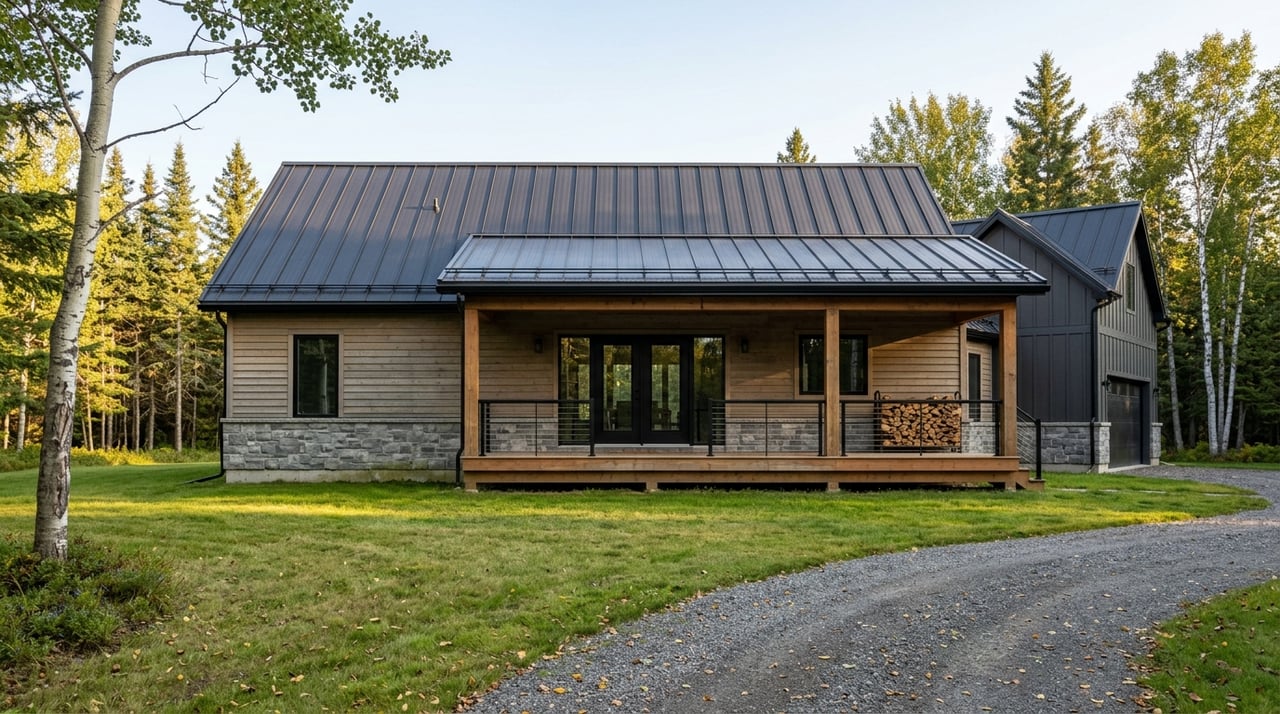
Buying a View or Acreage Home in Wasilla
April 9, 2026
April 9, 2026
Wondering if a Wasilla view or acreage home is the upgrade you have been waiting for? The scenery, extra space, and privacy can be a major lifestyle win, but these properties also come with practical questions that matter every month of the year. If you want a home that looks great and works well in real life, this guide will help you evaluate the land, access, utilities, and seasonal factors that shape smart buying decisions in Wasilla. Let’s dive in.
Wasilla has long attracted buyers who want more room, scenic surroundings, and a lower-density residential setting. The city’s comprehensive plan describes Wasilla as a place where residential use dominates the land pattern, with a mix of low-density rural residential areas and single-family subdivisions, while denser housing makes up only a small share. It also notes that many residents are drawn to the Valley for scenic and wildlife values, larger lots, and more separation from neighbors. You can review that context in the City of Wasilla Comprehensive Plan.
That local pattern helps explain why view homes and acreage properties continue to stand out in this part of the Mat-Su. For many buyers, the goal is not just a bigger lot. It is finding a property that supports privacy, outdoor hobbies, equipment storage, and year-round living without creating daily friction.
The broader market context also matters. According to borough QuickFacts included in the same planning materials, the Matanuska-Susitna Borough had 117,613 residents in 2024, 51,350 housing units, a 77.2% owner-occupied housing rate, and a median owner-occupied home value of $346,600. Wasilla itself had 10,318 residents in 2024. Those numbers help frame Wasilla as a place where homeownership and single-family living remain central to the local housing picture.
When you buy a view or acreage home in Wasilla, you are not just buying square footage or scenery. You are also buying the site’s strengths, limitations, and maintenance demands. That is why the smartest approach is to treat the purchase as a site-suitability decision first.
A beautiful parcel can still create problems if the driveway is hard to manage in winter, the drainage is poor, or large parts of the lot are limited by setbacks or easements. In this market, a property’s true value often comes down to how well the land supports your day-to-day life.
For move-up buyers especially, this is where planning pays off. If your goal is more freedom, more outdoor space, or a better Alaska lifestyle fit, the right property should make those things easier, not more complicated.
Acreage can look impressive on paper, but not every part of a parcel may be practical to use. Before you fall in love with a lot size, ask how much of the land is actually usable for the way you want to live.
The Mat-Su Borough zoning page notes that development near lot lines, public easements, rights-of-way, shorelines, and flood-hazard areas can be regulated. That means usable area may be reduced by setbacks, access needs, terrain, or other development limits.
This matters if you want room for things like:
A large parcel with awkward slope, wet ground, utility conflicts, or limited buildable area may function like a much smaller property. In other words, acreage alone does not tell the full story.
Utilities are one of the biggest due-diligence items for acreage properties in the Wasilla area. The borough’s planning material states that minimum lot size is 40,000 square feet when a parcel depends on on-site water and sewer, and it can drop to 20,000 square feet only when community water or sewer is available, though lot size within cities is determined by the city. You can see that framework in the borough planning material.
The same source material also shows how common private systems are in the borough. A borough wastewater study says 93% of borough households use private septic systems, while a borough water-quality report says 42% of residents with water service rely on private on-site wells and 58% use public water systems.
For you as a buyer, the practical takeaway is simple: the property’s utility setup matters as much as its lot size. You will want to confirm whether the home uses a private well, public water, septic, or another setup, and whether that setup fits your long-term plans for the property.
A scenic home still has to work on a dark winter morning. In Wasilla, road access is not a side issue. It is part of the ownership experience.
According to the borough, more than 1,100 miles of roads are maintained across 16 Road Service Areas, snow removal begins when snow depth reaches 4 inches, and driveway berm removal is the property owner’s responsibility. Those details are outlined in the borough’s road maintenance information.
That means you should verify whether the road serving a property is:
You should also think through the practical side of access. Is there enough room to turn around a truck or trailer? Does the driveway slope make winter use harder? Where will snow actually go after repeated storms? These are not small questions when you are buying a property meant to support a larger lifestyle.
Wasilla’s climate adds another layer to your decision. NOAA’s Wasilla community profile says the area averages about 17 inches of annual precipitation, about 50 inches of snowfall, and about 115 frost-free days, with first frost usually arriving by September 1. The same profile also notes that high winds above 60 mph are frequent in fall and winter. You can explore that data in NOAA’s Wasilla community profile.
For a view or acreage property, those conditions shape how the land functions. A lot that feels open and scenic in summer may feel exposed in winter if wind hits the house directly or drifting snow blocks parts of the driveway.
When you tour properties, pay attention to:
A strong property choice in Wasilla is one that supports your routine in January, not just in July.
Many acreage buyers want room for gardening, landscaping, trees, or hobby use. In Wasilla, success with outdoor projects often depends more on microclimate and drainage than on parcel size alone.
The University of Alaska Fairbanks Extension says Alaska’s short, cool growing season makes starter solutions helpful for transplants, and that tree and landscape placement should consider soil conditions, sun and wind exposure, drainage, hardiness zone, and available space. Their guidance also notes that parts of the Mat-Su Valley fall into USDA hardiness zones 2 to 4. You can find that advice in UAF Extension’s Alaska gardening guide.
UAF’s tree guidance adds more practical detail. It recommends planting at least 15 feet from buildings and away from roofs with sliding snow, utility lines, driveways, and sightline obstructions. For fruit trees, UAF recommends a south-facing gentle slope, good drainage, wind protection, and avoiding low spots where cold air or water collects. See the UAF tree planting guide for those specifics.
If outdoor living is a big part of your decision, ask whether the site supports your goals without fighting the climate. The right property should align with your plans for landscaping, storage, and long-term use of the land.
If the view is a major reason you are buying, look beyond the current snapshot. Scenic value can be affected by future development, lot lines, easements, and nearby land-use patterns.
The Wasilla comprehensive plan notes both a strong local preference for scenic quality and open space and concern about incompatible development in rural-residential areas. That does not mean a view will disappear, but it does mean you should understand the surrounding context before making a premium purchase.
This is especially important for buyers choosing between two otherwise similar homes. A slightly less dramatic view with better long-term site control may be the stronger decision than a bigger view with more uncertainty around neighboring land.
When you are comparing Wasilla view or acreage homes, keep your process simple and practical. Use a checklist that helps you evaluate the land the same way you would evaluate the house.
Start with these questions:
A disciplined review now can help you avoid surprises later. That is especially true if you are buying on a timeline, relocating from another area, or trying to balance lifestyle goals with long-term practicality.
Buying a Wasilla acreage or view property takes more than a quick showing and a strong offer. It takes a plan, clear communication, and local insight into the Alaska-specific factors that can change how a property lives over time.
That is where a process-driven team can help. Whether you are moving up locally, relocating to the Mat-Su, or trying to make a confident decision from a distance, Tristan Smith Realty Group brings a practical, Alaska-focused approach built around access, seasonality, site fit, and risk reduction. If you want help sorting through the tradeoffs and finding a property that works in every season, start with a confidential consultation.
Rooted in trust, expertise, and sincere dedication, we bring a lifelong appreciation of what “home” means to every client and every move.